Limited liability company (LLC)
The default choice
A separate legal entity with limited liability, possible with a single shareholder. It suits most services, consulting, tech and engineering projects. More on our LLC in Saudi Arabia page.
Company registration in Saudi Arabia follows two stages for a foreign investor: registering with the Ministry of Investment (MISA), then incorporating the company and obtaining the commercial registration on the Saudi Business Center. This guide covers the rules in force since the 2025 reform, government fees checked against official sources, and the points that actually cause delays.

Yes. The Investment Law sets out freedom of investment and equal treatment of Saudi and foreign investors. A foreign individual or company can own 100% of a Saudi company in the vast majority of activities. The exceptions sit on the list of excluded activities, which MISA publishes and updates.
The route has two stages. First, investor registration with MISA, which checks that the activity is open and that its specific conditions are met. Second, incorporation of the company on the Saudi Business Center, the Ministry of Commerce platform, which ends with the commercial registration (CR). The operational registrations follow: tax, social insurance, labour and the general manager's residence permit.
The detailed conditions (Saudi partner, capital, restricted activities) are covered on our page on requirements for foreigners. If you already run a company elsewhere and are weighing a subsidiary against a branch, see the next sections.
The right choice depends on your activity and how far you want to separate the parent company from the Saudi entity.
The default choice
A separate legal entity with limited liability, possible with a single shareholder. It suits most services, consulting, tech and engineering projects. More on our LLC in Saudi Arabia page.
Extension of the parent
No separate legal personality: the parent company is liable for the branch. Useful for delivering a specific contract. See branch office in Saudi Arabia.
Multinational groups
For groups that run the Middle East and North Africa region from Riyadh. MISA's guide requires, among other things, 15 full-time employees within the first year, 3 of them at executive level. See regional headquarters.
No commercial activity
For a foreign company that already has a Saudi agent or distributor and wants to provide technical support. The office cannot invoice or sign commercial contracts.
An overview. Our guide on how to start a business in Saudi Arabia goes through each platform (Qiwa, Muqeem, Balady, Ejar and the rest). Durations are indicative.
Identify the activity code (ISIC 4), check it is not on the excluded list, and note the conditions attached to it (capital, Saudi partner, sector approval).
Commercial register extract and latest financial statements of the foreign company, IDs and powers of attorney. Legalisation by apostille (Saudi Arabia has applied the Hague Convention since 7 December 2022) or by the Saudi embassy, depending on the form accepted at filing, then certified Arabic translation.
Online application for investment registration. The ministry notifies the fee on approval. Everything about it on our MISA licence and registration certificate page.
Trade name reservation and articles of association drafted on the Saudi Business Center, then approved electronically by the shareholders or their attorney.
Payment of incorporation and publication fees, issue of the CR, then membership of the chamber of commerce in the head office city.
Lease registered on Ejar, national address, and a municipal licence on Balady depending on the activity and premises.
Corporate bank account (banks often ask for the manager in person), ZATCA for zakat and VAT, GOSI, Qiwa, Muqeem, then the general manager's visa and iqama (residence permit).
Government fees and start-up costs for a foreign-owned services LLC, in Saudi riyals (SAR). Checked in September 2026; figures that are not officially published are shown as ranges.
Table 1
| Item | Amount | Source and comment |
|---|---|---|
| MISA registration | SAR 0 to about 62,000/yr, set on approval | Set case by case by MISA on approval (Investor Guide, 13th edition, 2026); range observed by advisory firms depending on the activity. Confirm at filing |
| LLC incorporation and CR | SAR 1,200 + SAR 500 | Incorporation and publication fees, plus 15% VAT (Saudi Business Center) |
| Chamber of commerce | A few hundred to a few thousand SAR/yr | Depends on the chamber and membership tier |
| Apostilles and certified translation | SAR 3,000 to 10,000 | Estimate, depending on the number of documents and country of origin |
| Office (Ejar lease) | From about SAR 15,000/yr | Estimate; a business centre is often the starting point |
| Levy on foreign employees | SAR 700 to 800/month | Per non-Saudi employee, general manager included. Confirm on Qiwa |
| Share capital | SAR 100,000 to 500,000 | Level expected in practice for a services LLC; no general statutory minimum. The capital stays with the company. Trading has its own thresholds |
After MISA registration, some activities need an extra approval or classification. Figures from MISA's Investor Guide (edition 02-2026).
The most direct route, usually with no sector licence. Fully foreign-owned engineering consultancy requires a presence in 4 countries and 10 years' experience. See consulting company.
At 100% foreign ownership: SAR 30 million in capital and a presence in at least 3 markets, plus training and investment commitments over 5 years. With a 25% Saudi partner: SAR 26.7 million. See trading company.
Industrial licence from the Ministry of Industry and Mineral Resources, often with land in an industrial city. See industrial licence.
Contractor classification is needed for public tenders, based on track record, accounts and headcount. See contractor classification.
Health, education, finance, telecoms, transport: the sector regulator must approve. Telecoms, for example, require 40% Saudi participation under MISA's guide.
Procedures are online and identical across the Kingdom. The city changes the chamber of commerce, office costs and the business environment.
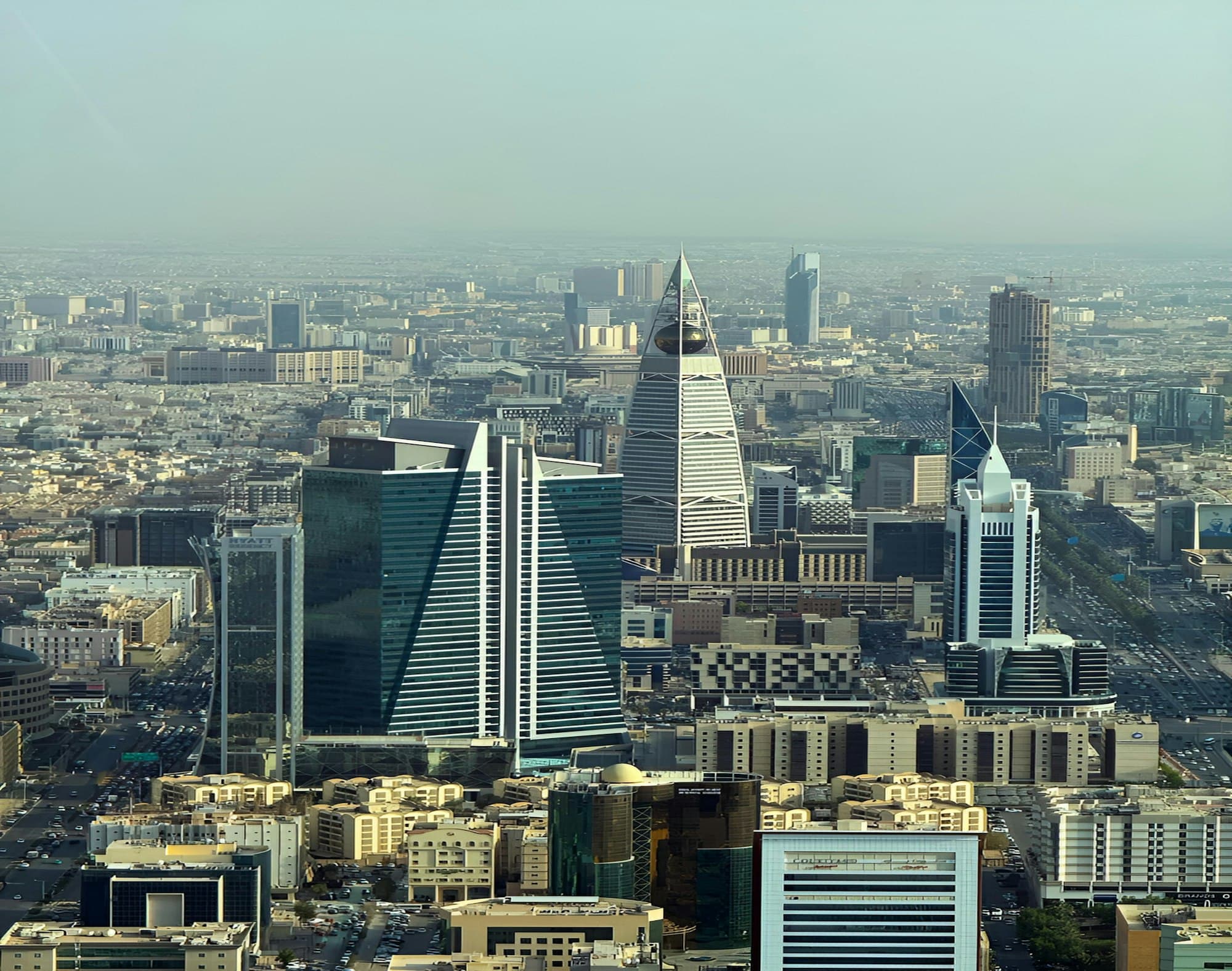
The obvious choice for public-sector work: ministries, sovereign funds and the head offices of large groups. The regional headquarters programme requires the RHQ to be in Riyadh.
Offices are the most expensive in the country, but business centres keep start-up costs under control.
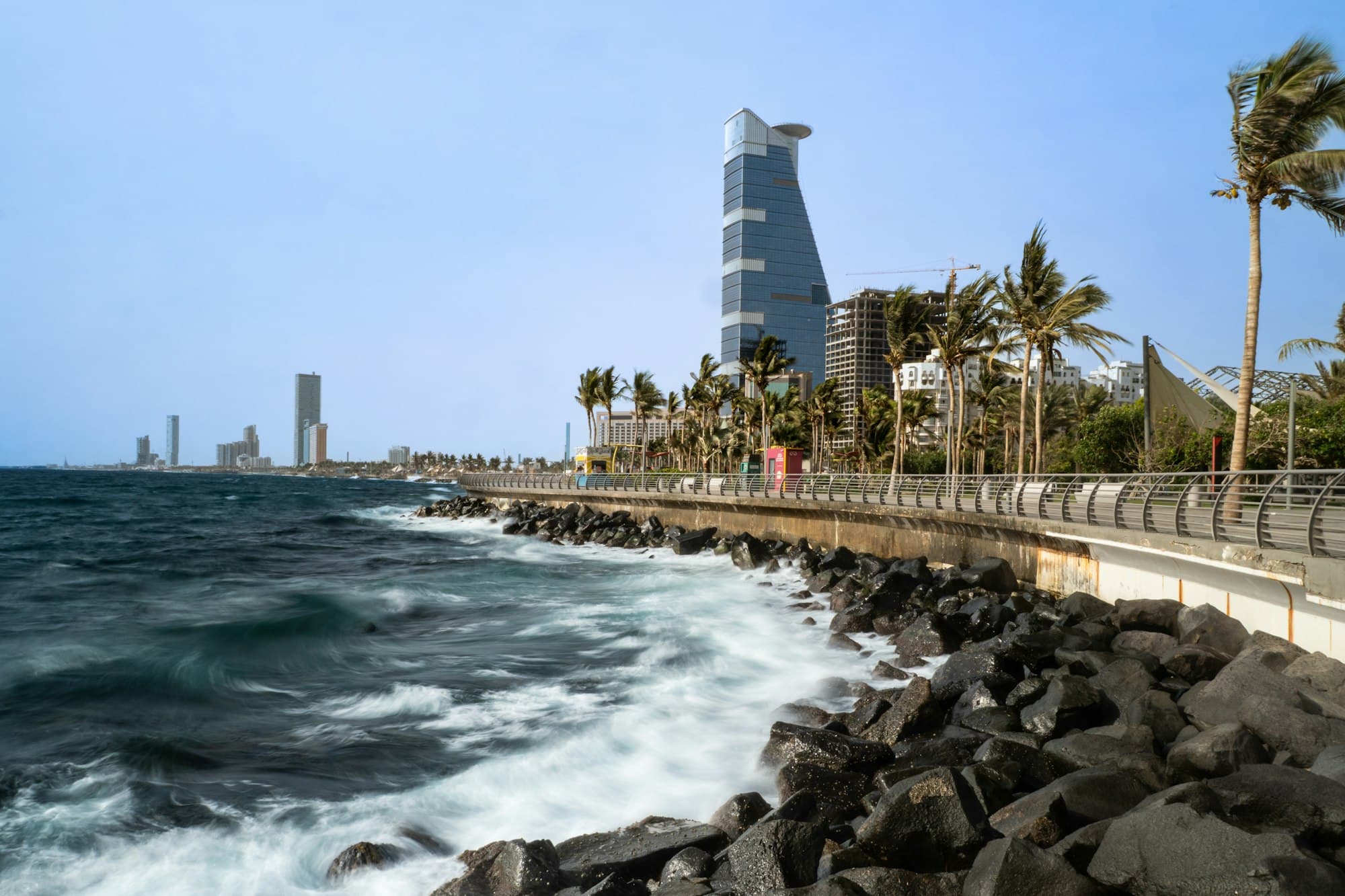
The historic commercial capital on the Red Sea, with Jeddah Islamic Port. Suited to trading, imports, logistics, hospitality and tourism, including religious tourism.
Offices generally cost less than in Riyadh.
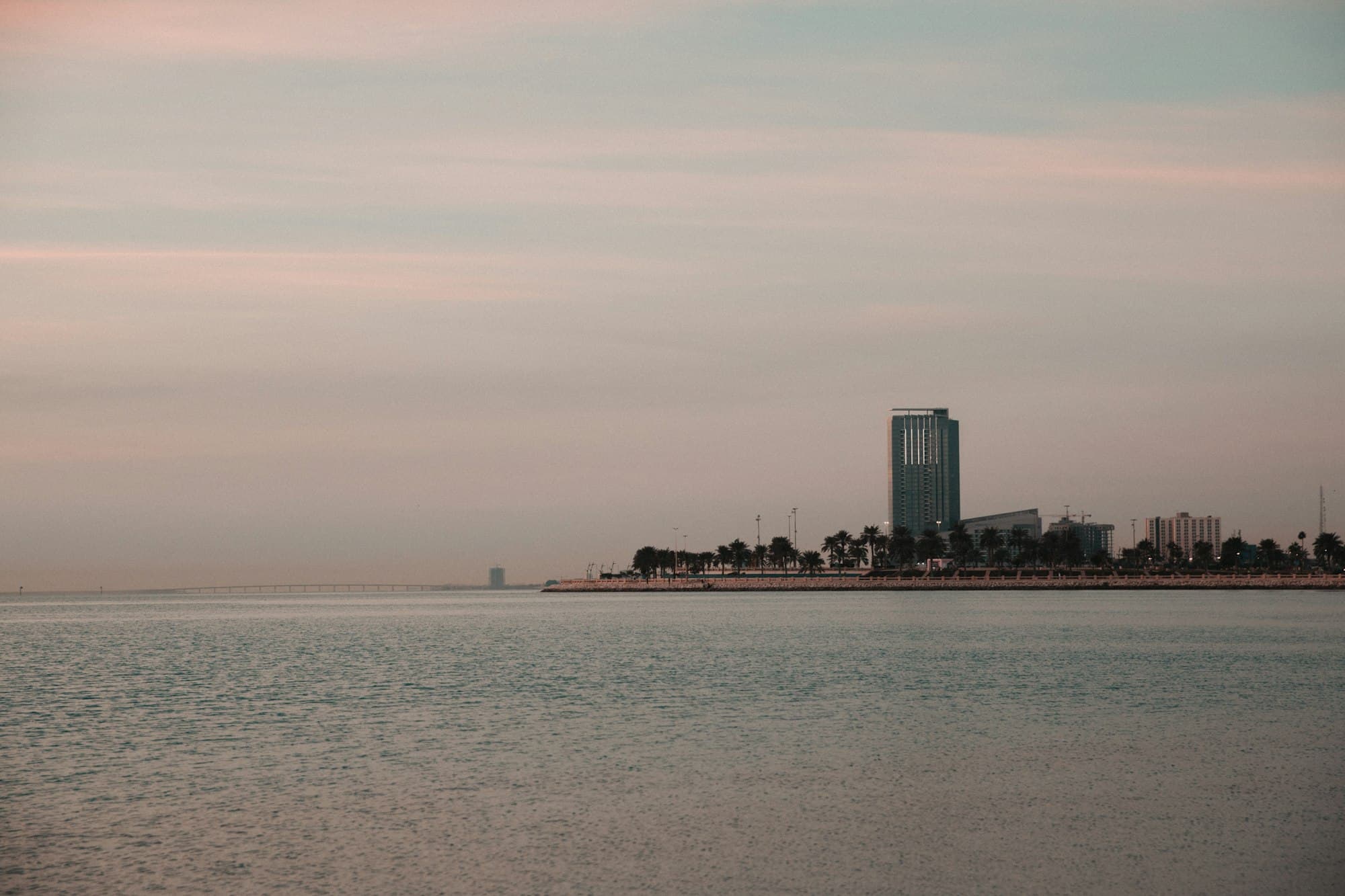
The centre of the Eastern Province and the energy sector: oil and petrochemical supply chains, industrial services, maintenance and engineering.
King Abdulaziz Port, nearby industrial cities and the King Fahd Causeway to Bahrain.
Pages covering each part of the project in detail.
Budget for the MISA fee, set case by case on approval (advisory firms report anything from zero to about SAR 62,000 a year depending on the activity; confirm at filing), SAR 1,200 for incorporation and SAR 500 for publication at the Ministry of Commerce, chamber of commerce membership, apostilles and translations, and an office. Share capital is not an expense: it stays in the company's account.
MISA states 10 working days to process a complete application, and the CR follows within a few days. Market providers generally quote 4 to 8 weeks to reach the CR, document preparation included, and longer once the bank account and the manager's iqama are added.
No, in most activities a foreigner can own 100% of the company. Some activities still require a Saudi partner, for example 40% in telecoms or 25% for certain professional activities, according to MISA's Investor Guide.
There is no general statutory minimum for a services LLC, but MISA and banks expect capital in line with the business plan, in practice SAR 100,000 to 500,000. Fully foreign-owned trading requires SAR 30 million.
Most steps are online, with a power of attorney. A trip is usually needed to open the bank account and for the manager's iqama (medical check and biometrics).
No. Since February 2025 the investment licence has been replaced by registration with MISA, evidenced by an investment registration certificate. It has to be updated every year.
Yes. MISA's guide exempts Special (Premium) Residency holders from providing the foreign commercial register, financial statements and activity-specific documents when registering. See our page on Premium Residency.
Information verified in September 2026. Amounts and timelines are observed ranges provided for information only. Government fees are set by Saudi authorities and may change: we confirm them in writing before you commit to anything.
A free 30-minute call with Nathan Fenina: we check your activity against MISA's excluded list, recommend a structure and send you a written estimate of government fees and timeline.