Economic and technical liaison office
No contracts
Studies the market and writes reports, with an annual summary filed with MISA. Barred from contracts and from any commercial or investment activity in the Kingdom.
A branch office extends your foreign company into Saudi Arabia without creating a Saudi company. It registers first with the Ministry of Investment (MISA), then on the commercial register at the Ministry of Commerce. This guide sets out the official requirements and documents, how the branch is taxed, and when a subsidiary (LLC) is the better choice.
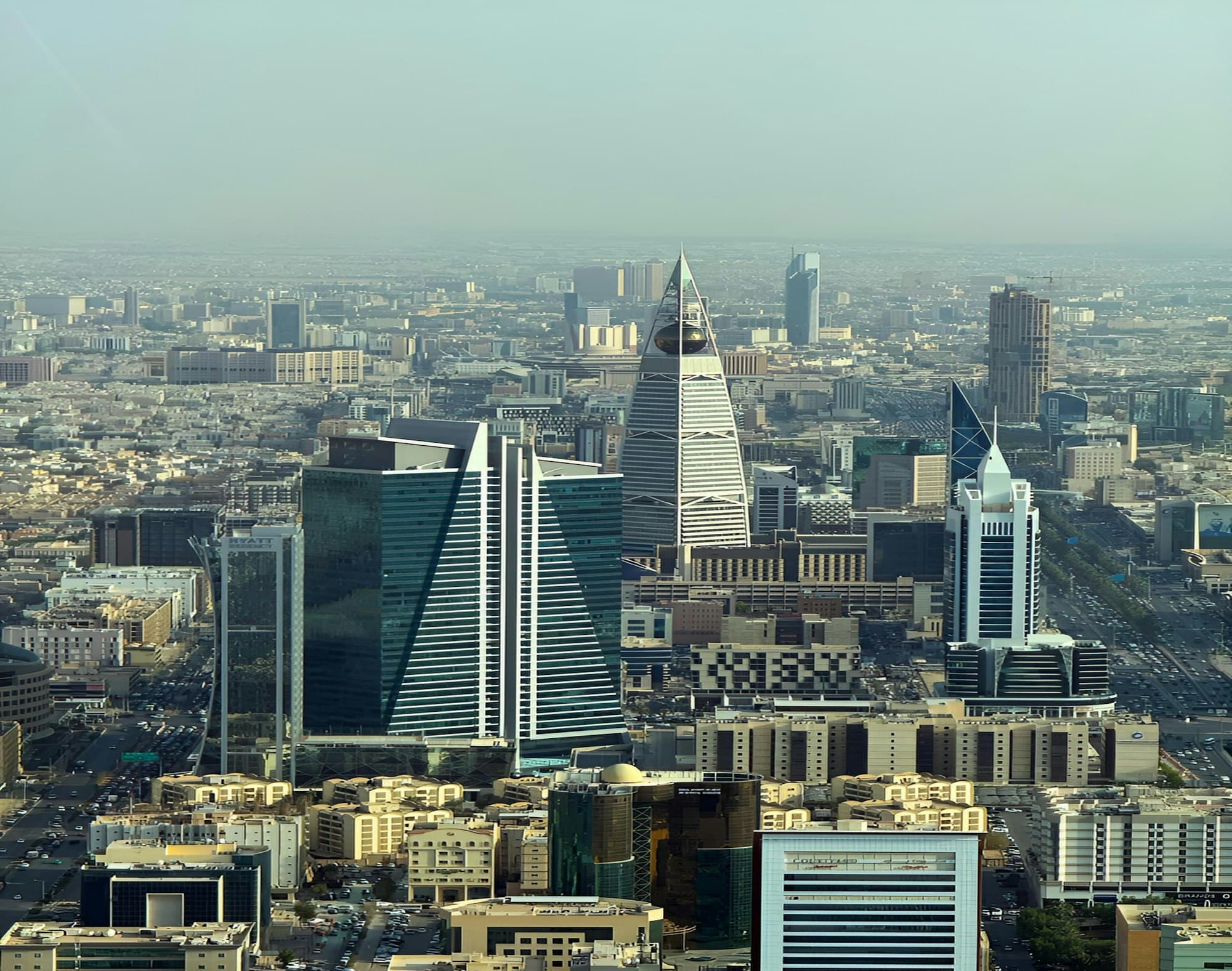
A branch office is your foreign company operating in the Kingdom, not a new company. It trades under the parent's name, within the parent's registered activity, with no assets of its own.
The parent is therefore liable for everything the branch owes: tax, salaries, end-of-service awards, commercial claims. In return, the branch has no shareholders and no Saudi articles of association; a parent resolution opens it and appoints its manager.
The route is the same as for any foreign-owned company: MISA registration first, then commercial registration. Activity conditions (capital, Saudi participation, sector licences) apply in exactly the same way.
Taken from the Ministry of Investment's Investor Guide (13th edition) and the Ministry of Commerce FAQ, both checked on 19 October 2026.
The two structures foreign companies use most. Tax rates shown for a parent outside the Gulf Cooperation Council (GCC).
Table 1
| Point | Foreign company branch | Subsidiary (Saudi LLC) |
|---|---|---|
| Legal personality | No, an extension of the parent | Yes, separate from its shareholders |
| Liability | The parent, with all its assets | Limited to the LLC's capital |
| Owner | The parent alone, no partners | One or more partners, individuals or companies |
| Existing company abroad | Required, with financial statements | Not required; an individual can be a partner |
| Capital | Activity thresholds in the MISA guide | No general legal minimum; SAR 100,000 to 500,000 expected in practice; activity thresholds |
| Founding document | Parent resolution (opening, manager) | Published articles of association |
| Ministry of Commerce fees | Similar order to an LLC, no articles to publish (confirm at filing) | SAR 1,200 incorporation and SAR 500 publication, plus 15% VAT |
| Tax on profit | 20% of the branch's net profit | 20% on the foreign partners' share; 2.5% zakat on the Saudi or GCC share |
| Getting profit out | Remittance to head office: 5% withholding | Dividend to a non-resident partner: 5% withholding |
| Best for | An established company delivering a contract under its own name and track record | A long-term presence, partners, or keeping the risk inside the Kingdom |
A branch of a non-resident company licensed to do business in the Kingdom is a permanent establishment. Its net profit is subject to 20% income tax, with a return filed with ZATCA (the Zakat, Tax and Customs Authority) within 120 days of the year end.
Zakat at 2.5% applies to Saudi and GCC ownership. If the parent is European, Asian or African, the branch pays income tax, not zakat.
ZATCA treats profit the branch remits to its head office as a dividend: 5% withholding tax, unless a tax treaty sets a lower rate. Technical services the head office charges to the branch and that the branch resells to Saudi clients also bear withholding tax; they remain deductible if they meet the conditions for allowable expenses.
An LLC wholly owned by a foreign company also pays 20%, and its dividends bear the same 5%. Tax does not decide between the two. VAT at 15% applies to both on the same terms.
The usual route for a services branch. Durations are estimates, except the published MISA processing time. Allow 4 to 8 weeks in total to the commercial registration, document preparation included.
Match the activity code against the activities open to foreign investment and their conditions. If the activity requires Saudi participation, a branch is ruled out: it cannot have partners.
Commercial registration, last year's financial statements, the resolution opening the branch and appointing the manager, then apostille or legalisation and certified Arabic translation.
Online application, then payment of the fee set on approval within 15 working days to receive the investment registration certificate.
Through the Digital Branch service on the Saudi Business Center, with the MISA certificate, the opening resolution and the manager's consent.
Chamber of commerce, ZATCA and GOSI (social insurance) registration, Qiwa and Muqeem accounts for visas and residence permits, then a bank account in the branch's name.
The Investor Guide lists other structures that are often confused with a branch. The key difference is the right to earn revenue.
No contracts
Studies the market and writes reports, with an annual summary filed with MISA. Barred from contracts and from any commercial or investment activity in the Kingdom.
Revenue
Signs, invoices and employs within its registered activity. The parent answers for its obligations.
Regional management
Set up as a company or as a registered branch of a foreign company. No revenue-generating activity outside its licence, and at least 15 full-time employees within a year. See regional headquarters.
The parent must be an existing, registered company and its activity must be open to foreign investment. MISA asks for its commercial registration and last year's financial statements, certified. The Ministry of Commerce then asks for the MISA certificate, a certified opening resolution and the manager's written consent.
Yes, it belongs entirely to the parent and has no partners. If your activity requires Saudi participation, a branch does not work: you need a company with a Saudi partner.
Yes, within its registered activity. It contracts in the parent's name and registers for VAT once it reaches the threshold. A liaison office cannot.
MISA sets its fee case by case on approval; advisory firms report a range from zero to about SAR 62,000 a year depending on the activity. Ministry of Commerce fees are close to those of an LLC, with no articles to publish. Legalisation and translation come on top; confirm every amount at filing.
MISA processes a complete file in 10 working days according to its guide. Allow 4 to 8 weeks in total to the commercial registration; the longest step is preparing and legalising the parent's documents.
With a parent outside the GCC, the branch pays 20% income tax on its net profit, and profit remitted to head office bears 5% withholding. Zakat at 2.5% applies to Saudi and GCC ownership.
A branch suits an established company delivering a specific contract under its own name. A subsidiary suits a long-term presence, a project with partners, or keeping the risk inside the Kingdom. Tax is the same in both cases.
Information verified in October 2026. Amounts and timelines are observed ranges provided for information only. Government fees are set by Saudi authorities and may change: they are confirmed in writing in the quote before you commit to anything.
We scope your project and coordinate its delivery with licensed professionals in Riyadh. We start from your activity, the contract's duration and your company's documents, then recommend the right structure in writing. A free first call, then a written fixed-price quote.